

【基隆必吃】仁和王牌主食-什錦炒麵|基隆特色小吃|仁和小吃-廣東麵系列
已更新:5月8日
仁和小吃主打麵食 | 廣東麵 | 什錦炒麵 (湯麵) / 餛飩乾麵
要了解一個地方的歷史,從食物下手是最快的。基隆是小吃店的一級戰區,從清晨5點開始的大街小巷,到深夜3、4點的廟口漁市,24小時 all day 都能吃到地道又實惠的餐點。基隆有二大特色,一是魚漿製品發達,二是廣東麵林立。 街頭巷尾隨處可見的小吃店都有乾麵、炒麵。 廣東麵是基隆相當熱門的小吃主食之一。 仁和小吃的什錦炒麵香氣十足...一起來探索這道在地美味!
Renhe Eatery Specializes in Noodle Dishes|Guangdong Noodles|Assorted Stir-Fried Noodles (Soup Noodles) / Wonton Dry Noodles (English text inside accordion)
To understand the history of a place, starting with its food is the fastest way.
Keelung is a battlefield of small eateries— from 5 a.m. in the morning across streets and alleys, to 3–4 a.m. late at night at the Miaokou fish market. You can enjoy authentic and affordable meals 24 hours a day.
There are two major features here: first, the development of fish paste products, and second, the widespread presence of Guangdong noodles.
Small eateries everywhere on the streets offer dry noodles and stir-fried noodles.
Guangdong noodles are one of the most popular snacks in Keelung.
The assorted stir-fried noodles at Renhe Eatery are full of aroma… let’s explore this local delicacy together!
✨招牌主食- 什錦炒麵
仁和小吃店擁有多種料理方式:乾麵、湯麵、煮麵、炒麵。除了續嘴 /suà-tshuì/ 的乾麵之外,什錦炒麵也是招牌主食之一。
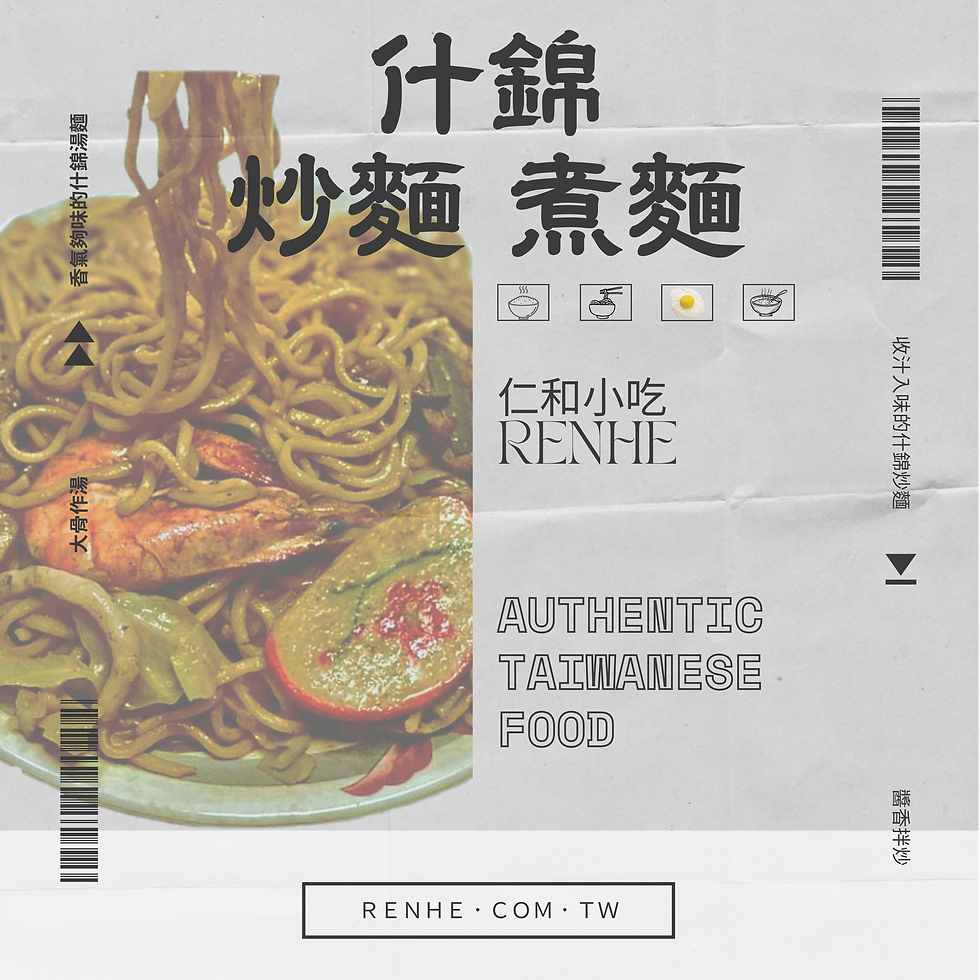
仁和什錦炒麵以~ 大骨做湯、鮮蝦提味、醬香拌炒、尾火收汁入味、不經油炸,保留了麵條的彈性與收汁後的乳化鮮甜;這是仁和小吃炒麵好食的秘訣,深獲鄰里八鄉、親朋好客的喜愛,並榮登仁和小吃主食類之網友票選第一名。 在仁和除了廣東炒麵外,也能依照喜好選擇粿仔條、油麵、米粉等不同麵體,滿足各種口感需求。
來仁和小吃,現點現炒,一起感受什錦炒麵的地道滋味!記得點名帥哥老板親自為您掌杓喔💖
Signature Main Dish — Assorted Stir-Fried Noodles (English text inside accordion)
Renhe Snack Shop offers four distinct noodle techniques — Dry, Soup, Broth-Boiled, and Fried — each with its own unique flavor profile.
Besides the suà-tshuì dry noodles (a Taiwanese term meaning “so tasty you keep eating”), assorted stir-fried noodles are also one of the signature main dishes.
Renhe’s assorted stir-fried noodles are prepared using pork bone broth, enhanced with shrimp, stir-fried with sauce,
and finished with high heat to condense the flavor.
They are not deep-fried, which preserves the elasticity of the noodles and the emulsified sweetness that forms when the sauce is absorbed. This is the key to what makes Renhe’s stir-fried noodles so delicious.
They are well loved by local neighbors, friends, and regular customers, and were voted No. 1 in the main dish category by online customers.
At Renhe, in addition to Guangdong-style stir-fried noodles, customers can choose different noodle types such as kueh-ah-tiâu, oil noodles, or rice vermicelli to suit their preferred texture.
Come to Renhe Snack Shop for freshly stir-fried noodles made to order, and enjoy the authentic flavor of assorted stir-fried noodles! And don’t forget to ask for the handsome owner to cook it personally for you 💖
✨基隆廣東麵的前世今生
The Past and Present of Guangdong Noodles in Keelung
廣東麵在基隆
研究基隆美食的作家曹銘宗曾說:「1949年國民黨撤退來台,戰後隨國民政府遷台的各省移民,搭船來台灣並在基隆上岸,很多人定居在基隆,或曾在基隆落腳後,再搬移到台灣各個角落。廣東潮汕人來到台灣後,從沙茶炒麵攤販開始做起,也開起了沙茶火鍋店,讓沙茶開始在台生根。」
廣東潮汕人不只會做沙茶也擅製麵。1950年以後,美國啟動援助的機制,制定「480法案」以半買半送的方式輸運物資,其中麵粉是大宗,因此在麵粉來源充裕下,麵食的製作便在全台流行起來。
另有一說,廣東人在基隆歷史悠久,溯自雞籠1863年開港時,就有廣東商人進駐。
號稱大清國留學生之父的容閎,廣東出生,在清末自強運動期間,人在上海的容閎曾出手投資雞籠的土地與煤礦。
曾和容閎打官司的廣東垂遠堂,持有崁仔頂的一批土地。崁仔頂在基隆市街發展史上占有重要地位,從日本時代到民國時期竟然有一批土地登記在廣東會社名下,足堪證明廣東移民在基隆或許人數不多,但卻具有一定的影響力。
Guangdong Noodles in Keelung
Writer Tsao Ming-tsung, who researches Keelung cuisine, once said:
“When the Kuomintang retreated to Taiwan in 1949, immigrants from various provinces who followed the Nationalist government crossed the sea and landed in Keelung. Many settled in Keelung, or stayed temporarily before moving on to different parts of Taiwan.
After people from Chaozhou and Shantou in Guangdong arrived in Taiwan, they began with street stalls selling stir-fried noodles with satay sauce, and later opened satay hot-pot shops, which allowed satay to take root in Taiwan.”
People from the Chaoshan region of Guangdong are skilled not only in making satay but also in noodle production.After 1950, the United States launched an aid program and implemented PL-480, transporting supplies to Taiwan through a half-purchase, half-donation model. Among these supplies, wheat flour was a major component. With an abundant supply of flour, noodle production spread widely across Taiwan.
Another account holds that people from Guangdong have had a long history in Keelung, tracing back to the opening of the port at “Keelung (Kelang)” in 1863, when Guangdong merchants already settled there.
Yung Wing (Rong Hong), known as the “father of Qing dynasty overseas students,” was born in Guangdong. During the Self-Strengthening Movement in the late Qing period, while living in Shanghai, he invested in land and coal mining in Keelung.
The Guangdong organization “Chui-Yuan-Tang,” which once engaged in legal disputes with Yung Wing, held ownership of a portion of land in Kànzǎidǐng.
Kànzǎidǐng occupies an important position in the history of urban development in Keelung. From the Japanese colonial era through the Republic of China period, a section of land was registered under the name of a Guangdong-based company, demonstrating that although the number of Guangdong immigrants in Keelung may not have been large, they nevertheless held a certain degree of influence.
廣東麵很陽春
在基隆,一種麵條有三個不同的名稱?!
廣東麵 aka 陽春麵 aka 摵仔麵
基隆叫廣東麵,聽說當初這種麵條在捍製時要放入些許鹼水和鴨蛋,以增加彈牙的口感,所以和意麵不太一樣,本來是一種鹹味的湯麵,後來慢慢衍變成乾麵的型態在基隆最受歡迎。在基隆以外的地方,人們並不稱為「廣東麵」。
另一個名稱源自於煮麵的狀聲詞,煮麵的過程發出沏沏沏的聲音,又稱摵仔麵 (註1)
廣東麵,寬扁的麵條,摵熟後 (註2) 簡單淋上一瓢油蔥豬油,再丟些豆芽菜、韭菜、幾片豬瘦肉;還有另一種做法,會多加一匙特製醬油。一碗沒有過多的調味的清爽乾拌麵,也叫陽春麵。在基隆,不論乾麵、湯麵、炒麵、煮麵都離不開廣東麵的身影,成為特色小吃中,主食的扛霸子地位。
註1: 笊篱是一種烹飪器具,在烹飪時,用來撈取食物,英文稱為strainer。因為網狀酷似蜘蛛網,別名叫做kitchen spider。
註2: 摵 /Tshi̍k/:摵就是手提笊篱上下用力搖晃發出的聲音,摵仔麵 /chhe̍k á mī/就是在熱滾水中上下用力搖晃讓麵體熟成的過程,因讀音相近的關係現在習慣稱「切仔麵」。
Guangdong noodles are very simple.
In Keelung, one type of noodle has three different names?!
Guangdong noodles, also known as “Yangchun noodles,” also known as “tshi̍k-á noodles.”
In Keelung, this noodle is called “Guangdong noodles.”
It is said that when the noodles were originally made, a small amount of lye water and duck eggs were added to give them a firm and springy texture, making them different from yi-noodles.
They were originally a salty soup noodle, and later gradually evolved into a dry-noodle style that became the most popular in Keelung.
Outside Keelung, people do not refer to them as “Guangdong noodles.”
Another name comes from the onomatopoeic sound made during the noodle-cooking process, which produces a “tshi̍k-tshi̍k-tshi̍k” sound, and is therefore also called tshi̍k-á noodles (Note 1).
Guangdong noodles are wide and flat noodles. After they are tshi̍k-cooked (Note 2), they are simply topped with a ladle of scallion lard, then some bean sprouts, garlic chives, and a few slices of lean pork are added. Another method adds a spoonful of special soy sauce. A bowl of lightly seasoned dry-mixed noodles without excessive flavoring is also called Yangchun noodles.
In Keelung, whether dry noodles, soup noodles, stir-fried noodles, or boiled noodles, Guangdong noodles are always present, holding a leading position among staple foods in the category of local snacks.
Note
Note 1: A zhàolí is a cooking utensil used to lift food during cooking, known in English as a strainer.
Because its mesh resembles a spider’s web, it is also called a “kitchen spider.”
Note 2: “Tshi̍k” refers to the sound produced by vigorously shaking a strainer up and down by hand.
“Tshi̍k-á mī” refers to the process of shaking the noodles up and down in boiling water to cook them through.
Because of the similarity in pronunciation, it has since become commonly called “Tshi̍k-á noodles”.

-- 參考資料來源
民報【魚夫專欄】基隆廣東麵v.s.台南意麵


留言